


The year did not announce itself. It arrived quietly, already in motion, already embedded in the way work was being done. By the time we started talking seriously about AI again, it had already settled into our tools, our workflows, and our decisions, shaping outcomes in ways that felt subtle at first and obvious only in hindsight.
2025 was not about discovering what AI could do. It was about realizing what had changed while we were busy using it. The shift was not dramatic. It was gradual, cumulative, and difficult to pinpoint in a single moment, which is often how the most consequential changes arrive.
This was not the year AI arrived. It was the year we noticed it was no longer leaving.
Like a year-end recap, the story revealed itself in patterns rather than highlights. Repetition rather than novelty. And in those patterns, uncomfortable truths surfaced. About our data.
From here, the rest of the story unfolds naturally.
Top Track of the Year: “AI, Everywhere (Extended Mix)”

In 2025, AI did not arrive with ceremony. It seeped. Quietly. Casually. The way water finds cracks in walls you assumed were solid. No announcement. No countdown. Just one day, realizing it was already there, doing small things that added up to something much larger.
It began innocently. Meeting notes that wrote themselves a little too eagerly. Emails that suddenly sounded polished and calm. Forecasting tools offering outcomes with the confidence of someone who skimmed the documentation and felt ready. Grant proposals, performance reviews, internal briefs, dashboards. One by one, they all developed a mind of their own.
That was the moment AI stopped being a headline and became infrastructure. And infrastructure, by definition, is dull until it breaks and unavoidable once it exists. The excitement faded quickly. The implications did not.
Along the way, the questions changed. People stopped asking what AI could do because the answer was increasingly “most things, technically.” The better question became why it behaved like a person with extraordinary confidence and limited context. Helpful. Fast. Occasionally brilliant. Just unreliable enough to keep you awake.
Prompting stopped being about clever phrasing and started resembling emotional regulation. Verification became muscle memory. Trust was no longer given. It was negotiated, output by output.
The real shift, though, was not technical. It was psychological. We stopped treating AI like an oracle and started treating it like a mirror. Not inventing problems, just reflecting whatever we fed it back to us, amplified and neatly formatted.
AI did not create new problems. It made existing ones harder to ignore. And once that became clear, there was no going back.
Genre Shift: Governance

If AI was the star of the year, data was the character that suddenly got real screen time and stole the plot.
Messy datasets that once limped along unnoticed now caused very public failures. Definitions conflicted. Ownership was unclear. Lineage was a mystery. Models amplified every inconsistency like a megaphone pointed at your organizational habits.
2025 exposed a quiet truth most teams had avoided for years. You cannot scale intelligence on top of confusion. AI did not create data problems. It made them impossible to ignore.
Suddenly, governance was no longer a boring appendix. It became survival equipment. Not because policy is fun, but because hallucinations are expensive when they show up in executive decisions.
Unexpected Collaborator: Ethics (Live Version)
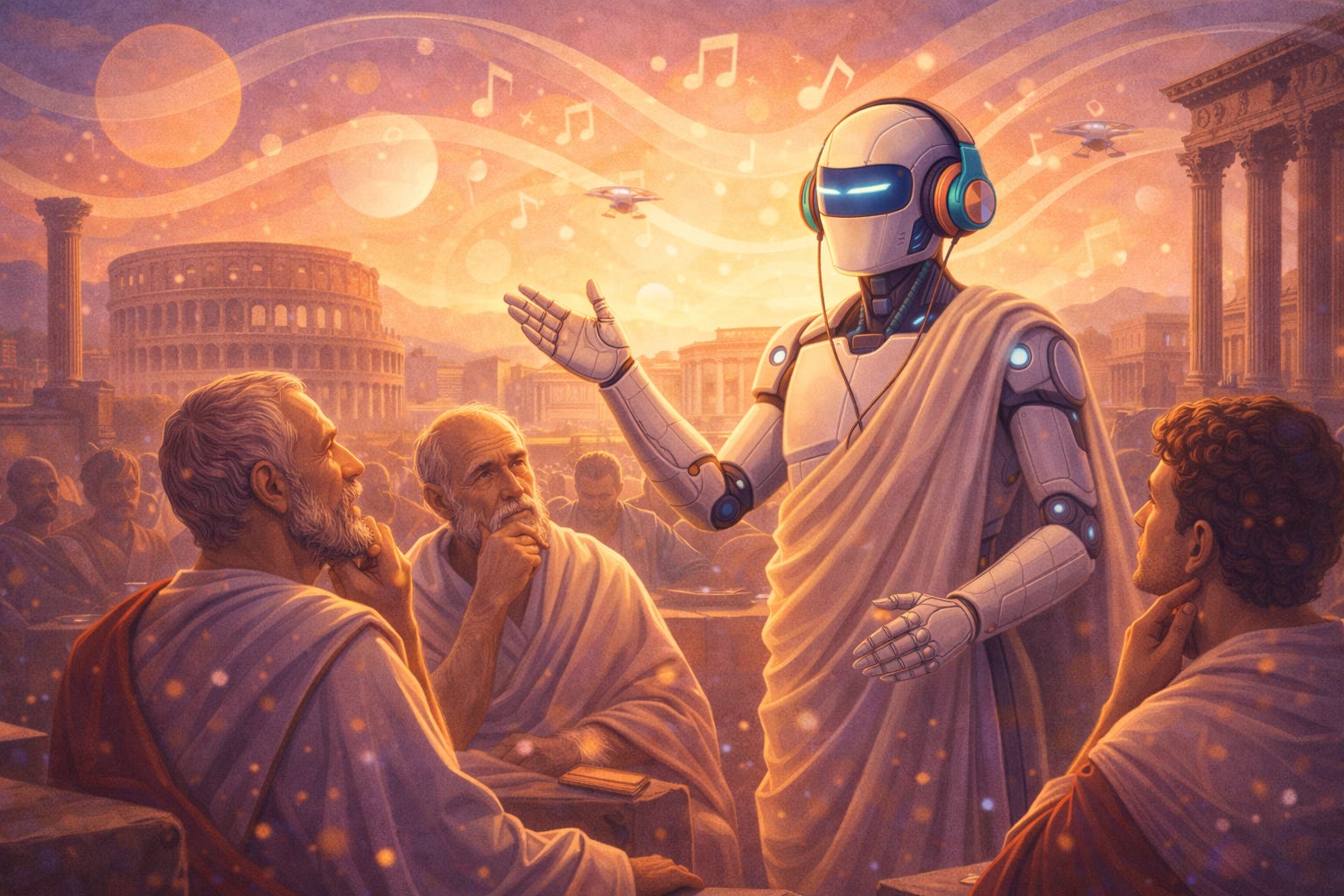
This was also the year ethics stopped being theoretical.
Bias was no longer a footnote in a slide deck. Privacy was no longer something legal would “circle back on.” Transparency was no longer optional once AI outputs started shaping real outcomes for real people.
Organizations discovered that building fast without thinking carefully does not make you innovative. It makes you loud. The most effective teams slowed down just enough to ask uncomfortable questions about responsibility, accountability, and the quiet consequences.
The surprise was not that ethics mattered. The surprise was how operational it became.
Listener Growth: Everyone Became a Data Person

Another highlight from your Wrapped.
In 2025, data literacy escaped the analytics team and wandered freely across organizations, occasionally bumping into people who never expected to deal with numbers beyond a slide title. Program managers did not just view dashboards; they read them. Designers asked what the metrics were actually measuring. Executives, sometimes reluctantly, learned the difference between correlation, confidence, and a well-phrased assumption.
AI lowered the barrier to entry and quietly raised the cost of misunderstanding. Asking questions became effortless. Understanding the answers became the real work. Insight stopped being about producing charts and started being about deciding what deserved belief, what required context, and what should be challenged.
The data itself did not become simpler. The conversations around it became more honest. People became braver about engaging with uncertainty, asking better questions, and admitting when a number needed explanation rather than applause.
And that shift mattered more than any new tool.
The Loop on Repeat: AI as a Mirror

AI reflected us back to ourselves with uncomfortable clarity. Our assumptions. Our shortcuts. Our biases, quietly preserved inside spreadsheets nobody remembered creating but everyone depended on. When organizations were confused, models sounded confused too. When processes were brittle, outputs fractured under pressure, no matter how advanced the technology appeared on the surface.
What became clear was that AI did not replace thinking. It punished the absence of it. It exposed where judgment had been outsourced without intention and where decisions relied more on momentum than understanding.
The pattern was consistent. The stronger the foundations, the better the results. Not smarter. Not faster. Not flashier. Just clearer.
Underrated Track

While the spotlight stayed fixed on large systems and global platforms, something quieter unfolded elsewhere.
Small teams and emerging markets approached AI less like a revolution and more like leverage. Not a grand reinvention, but a practical tool to stretch limited resources, move faster, and make better decisions with what was already available. They built pragmatically, adjusted quickly, worried far less about perfection, and paid attention to usefulness.
Context mattered in ways that glossy demos rarely accounted for. Local knowledge shaped how models were used. Constraints forced clarity. Limited data demanded better questions. In many cases, the lack of abundance became an advantage, encouraging systems that were simpler, more adaptable, and easier to trust.
The future did not look uniform or standardized. It looked local.
Next Up in Your Queue: Maturity 2026

As I eat my twice-warmed Christmas jollof rice, it becomes easier to see the year for what it actually was, not as a sprint toward the future, but as a collective arrival.
If 2025 was about arrival, 2026 will be about maturity.
Arrival is loud. Maturity is quieter. It shows up not in demos or announcements, but in the decisions teams make when nobody is watching. In what gets maintained instead of replaced. In what gets questioned instead of shipped.
The coming year will be defined by fewer experiments and more systems. Less hype, more integration. Less fascination with what AI can do, and more scrutiny around what it is doing, who benefits, and what happens when it fails. The conversation will shift from capability to consequence.
General intelligence will give way to purpose. Specialized agents, designed for narrow contexts and clear responsibilities, will outperform broad tools that promise everything and explain very little. Governance will stop feeling like a constraint imposed after the fact and start resembling product design, embedded early, shaping behavior rather than policing it.
Trust will become something you can measure, not just assume. Reliability will matter more than speed. Consistency more than novelty. The systems that endure will not be the fastest, but the ones that fail predictably, recover gracefully, and make their limits visible. In that environment, the advantage will not belong to those who adopted first. It will belong to those who built deliberately.
So as the year winds down, the dashboards go quiet, and the jollof rice is reheated one last time (because it took me longer to reconstruct this paragraph), the takeaway feels less dramatic and more honest. The future did not arrive all at once. It seeped in, reshaped routines, and asked us to grow into it. 2025 was not about mastering AI. It was about learning to live with it responsibly, thoughtfully, and with just enough humility to admit when the system needs us more than we need it. If 2026 asks anything of us, it is not speed or spectacle, but intention. Better questions. Stronger foundations. And the patience to build things that still make sense after the leftovers are gone.

Before you scroll.
I’m collecting quick insights on African-inspired design, culture, and usability in tech. It takes under two minutes, and it feeds a larger African UX research series.
“If 2026 asks anything of us, it is not speed or spectacle, but intention.” - this is so profound, I'm making it my everything mantra for 2026